
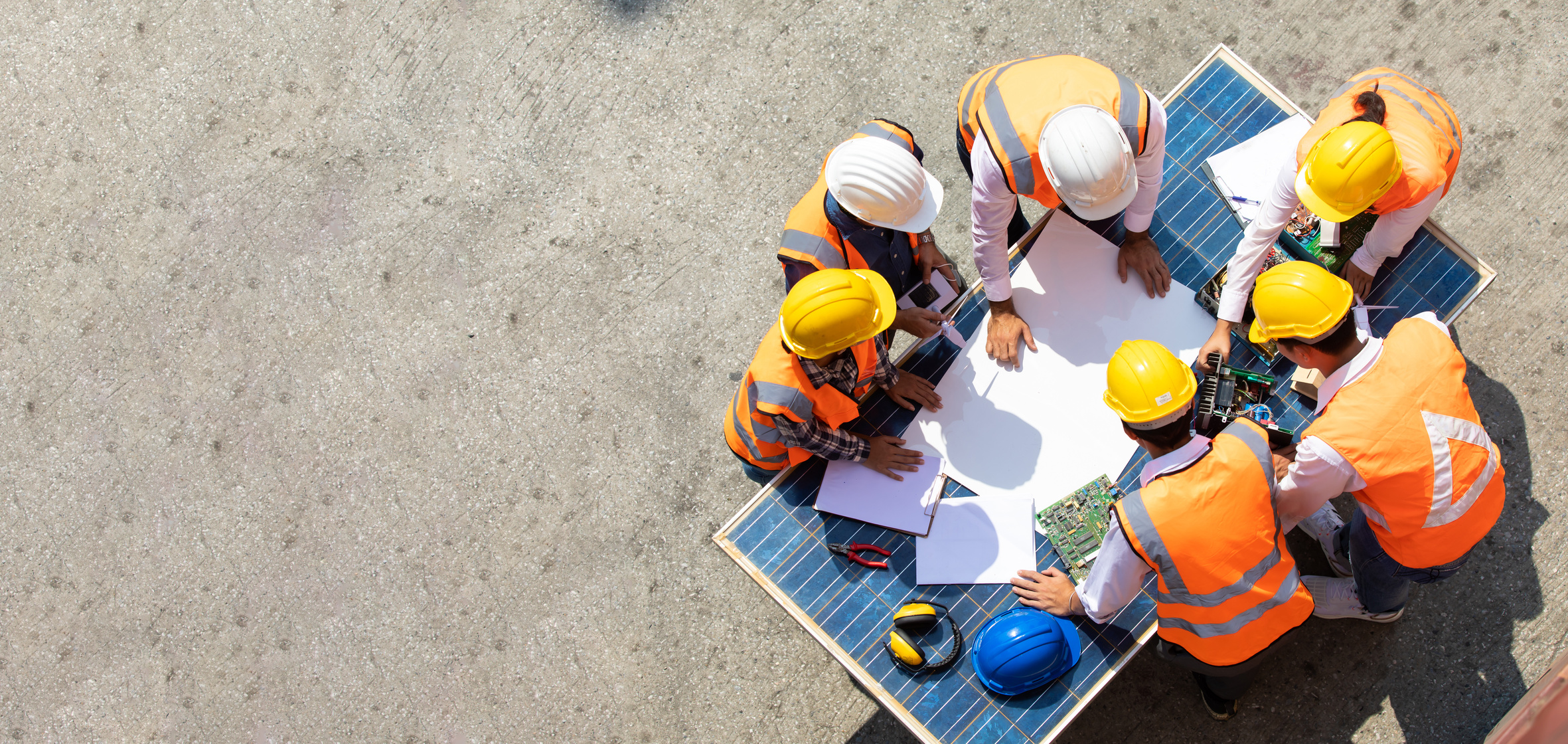
Large-scale solar construction involves a combination of hazards that make it one of the more demanding environments in the construction industry from a safety standpoint. Electrical hazards unique to photovoltaic systems, heavy equipment operations across large project footprints, and prolonged outdoor work in high-heat environments all require specific safety protocols, trained personnel, and disciplined site management.
For developers, EPC leads, and electrical contractors working on commercial and utility-scale solar projects, understanding the hazard landscape and the standards that govern it is fundamental to protecting workers and maintaining project integrity from groundbreaking through commissioning.
Why Solar Construction Safety Has Unique Considerations
Solar construction shares many hazards with general commercial construction, but photovoltaic systems introduce electrical risks that require specific protocols beyond standard construction safety practices.
The most significant distinction is that solar panels generate DC electricity whenever they are exposed to sunlight. Unlike AC electrical systems, where current alternates at a regular cycle, DC current from a solar array does not have a natural zero-crossing point. This makes it more difficult to interrupt and more likely to sustain an arc. A PV system that appears de-energized at the inverter may still be generating dangerous voltage at the panel level. Workers who do not understand this distinction are at elevated risk of electrical shock or electrocution, even on systems that appear to be offline.
Arc flash is a related and serious hazard in solar construction. An arc flash event releases intense thermal energy, pressure, and light that can cause severe burns and other injuries in a fraction of a second. Properly identifying arc flash boundaries, calculating incident energy levels, and ensuring workers are equipped with PPE rated to the hazard are all required under NFPA 70E and OSHA electrical safety standards.
Core Safety Hazards on Large-Scale Solar Construction Sites
Electrical Hazards and Energized DC Systems
Working with energized DC circuits in PV systems requires specific training, test equipment, and personal protective equipment. Electrical work should be performed only by qualified personnel trained to recognize PV-specific hazards, verify electrical status, and follow project-specific safety procedures. Effective lockout/tagout for a solar array requires written, system-specific procedures that may include reducing irradiance, isolating DC circuits, verifying de-energization with appropriately rated test equipment, and applying locks and tags that communicate system status to all workers on site. The complexity of LOTO on commercial and utility-scale solar PV systems requires written procedures specific to the system configuration rather than generic templates.
Arc Flash Hazards
Arc flash hazard analysis for commercial and utility-scale solar installations should be completed before energization and should identify flash protection boundaries for each point of interconnection. Workers within those boundaries must wear arc-rated PPE appropriate to the calculated incident energy. This includes arc-rated clothing, face shields, and insulating gloves rated for the voltage class of the work being performed.
Struck-By Incidents and Heavy Equipment Hazards
Ground-mounted solar construction involves substantial heavy equipment activity. Forklifts, cranes, and material handling equipment move solar modules, racking components, and electrical equipment across active construction sites. Struck-by incidents, where workers are hit by moving equipment or falling objects, are among the most common serious injuries on construction sites generally and are a material risk in solar construction where equipment and pedestrian traffic share the same ground space.
Effective mitigation requires designated traffic control plans, clearly marked exclusion zones around lifting operations, spotters for heavy lifts and equipment moves, and consistent enforcement of hard hat and high-visibility vest requirements across the full project footprint. A job hazard analysis completed before each phase of heavy equipment activity helps identify site-specific risks and define the controls required to manage them.
Heat and Dehydration
Large-scale solar construction typically occurs in high-irradiance locations with extended outdoor work hours. Heat illness, including heat exhaustion and heat stroke, is a serious and potentially fatal hazard for solar construction workers, particularly in Southwest and Texas markets where summer temperatures can be extreme.
Effective heat illness prevention requires scheduled rest periods in shaded or cooled areas, mandatory hydration requirements, heat illness training for all workers and supervisors, monitoring of heat index conditions, and clear protocols for recognizing and responding to symptoms of heat-related illness. New and returning workers should also be given time to acclimatize to high-heat conditions before taking on full outdoor workloads. Dehydration develops faster than workers often recognize, and site supervision that enforces hydration and rest schedules is as important as any individual worker’s awareness.
Workplace Hazards from Tools and Materials
Power tools used in solar construction, including drills, grinders, and crimping tools, introduce standard construction site hazards that require consistent PPE compliance and tool inspection protocols. Solar modules are heavy and awkward to handle in large quantities. Improper lifting techniques, inadequate crew sizes for manual handling tasks, and unsecured panel stacks are common contributors to sprains, strains, and other musculoskeletal injuries. Safe work practices for module handling should be defined in the project safety plan and enforced by site supervision.
Standards and Frameworks That Govern Solar Construction Safety
Several regulatory and standards frameworks establish the baseline requirements for safe solar construction. OSHA’s construction standards under 29 CFR Part 1926 govern general construction site safety, including electrical work, fall protection, and heavy equipment operation. NFPA 70E provides detailed requirements for electrical safety in the workplace, including arc flash analysis and PPE selection.
A comprehensive job hazard analysis completed before each work phase identifies site-specific hazards, evaluates the risk of each, and documents the controls required to reduce that risk to an acceptable level. A JHA is not a one-time document — it should be updated when site conditions, work scope, or personnel change in ways that introduce new hazards.
Toolbox talks, delivered at the start of each shift by site supervision, reinforce safe work practices on a daily basis and provide an opportunity for workers to raise concerns about site conditions before work begins. Safety leadership that makes it easy for workers to raise concerns is one of the strongest indicators of a well-managed construction site.
How Axium Solar Approaches Construction Safety
For Axium Solar, safety is built into the structure of how electrical construction is managed on commercial and utility-scale solar projects, not treated as a separate compliance function.
Axium’s field teams work with project-specific safety plans that address the electrical hazards, equipment operations, and environmental conditions specific to each solar installation. Lockout/tagout procedures are developed for the specific PV system configuration. Arc flash requirements and applicable electrical hazard assessments inform PPE requirements before energization. Heat illness prevention protocols are standard on Southwest job sites where environmental conditions make heat exposure a consistent risk.
For EPC leads evaluating electrical construction partners for large-scale solar projects, the safety record and safety management approach of a subcontractor is a material criterion. A subcontractor’s safety performance affects not only worker wellbeing but also project schedule, insurance exposure, and the EPC lead’s overall site safety record.
Safety as a Foundation for Project Success
Solar construction safety is not separate from project execution — it is part of it. Sites with well-managed safety programs experience fewer incidents, fewer schedule disruptions, and fewer cost impacts from injuries and investigations. Workers who are trained, equipped, and supervised effectively are more productive and produce higher-quality work.
For commercial and utility-scale solar projects where the electrical scope is complex and the consequences of errors are significant, safety discipline and technical execution are two sides of the same operational standard.
If your organization is planning a large-scale solar project and wants an electrical construction partner that treats safety as foundational to project delivery, Axium Solar can help.
Contact Axium Solar to discuss your project’s electrical construction scope and safety requirements.
Explore our Services and Service and O&M pages to learn more about how Axium supports commercial and utility-scale solar projects across the Southwest.
